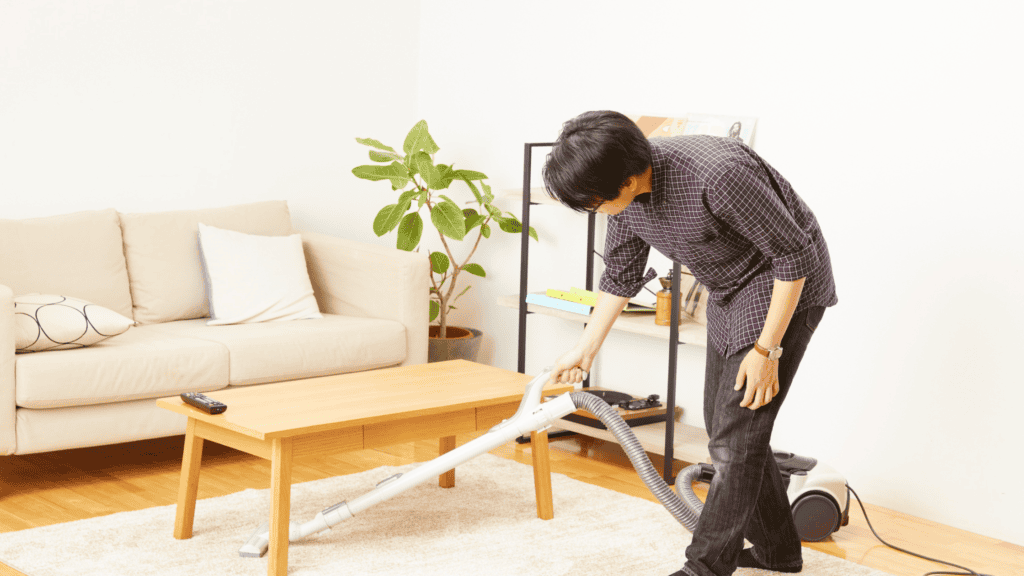
Vacuum cleaning is a chore that most people do not enjoy, yet it is a normal and necessary part of life. Clean floors matter for comfort, appearance, and health. Unfortunately, vacuuming is not friendly to the low back. The task often requires repeated bending, twisting, and lifting of the trunk. These movements are well known for increasing stress on the lumbar discs. Over time, that stress can raise the risk of low back pain and disc injury. Although a new nonsurgical procedure called Discseel exists to treat lumbar disc injuries, it is far more strategic to reduce the chance of disc damage than to deal with pain and loss of function after an injury occurs.
Tips for Vacuum Cleaning and Low Back Pain
One of the first priorities is choosing the right vacuum cleaner. Investing in the lightest weight machine that still provides adequate suction for your needs can make a real difference. A heavier vacuum takes more force to push and pull across the floor. That extra force increases torque on the low back, especially during turns and direction changes. Over the course of a full cleaning session, those small added exertions can add up. A lighter machine reduces strain and allows smoother movement.
Body position also plays a major role. Many people vacuum by bending forward at the waist. This posture places high pressure on the lumbar discs, especially when it is repeated many times. A safer option is to widen your stance and shift your weight through your legs. By flexing at the knees and hips instead of the waist, you allow your stronger leg muscles to do more of the work. Rocking back and forth through the hips while keeping the spine more upright can significantly reduce disc stress.
Changing your vacuuming pattern is another helpful strategy. Many people use a fan shaped motion while hinging forward at the waist. This pattern combines bending and twisting, which is a risky mix for the low back. Instead, consider vacuuming in straight lines like mowing a lawn. Walk behind the vacuum for one long strip of carpet, then turn around and pull the machine back along a parallel swath. This method keeps your spine more neutral and limits twisting. You do need to be careful about the cord to avoid tripping, but with awareness this pattern can be safer and more efficient.
Furniture will always be an obstacle. Chairs, tables, and couches force you to adjust your movements. Planning ahead helps. Move lighter furniture out of the way before you start. For low spaces, consider squatting rather than bending. Squatting lowers your body by using the hips and knees while keeping the back straighter. This position reduces pressure on the lumbar discs and improves balance. Take your time and experiment to find the safest way to reach tight areas in your specific floor plan.
Pacing is another important factor. Vacuuming the entire house in one long session can lead to fatigue. Fatigued muscles provide less support for the spine. Taking short breaks or splitting the task into smaller sections, even on different days can help maintain better form and reduce strain. Wearing supportive shoes can also improve stability and reduce stress that travels up the body to the low back.
With today’s technology, robot vacuum cleaners are another option. Some common advantages include minimal physical effort, consistent cleaning, and reduced bending and twisting. They can be especially helpful for people with chronic back issues. However, there are some disadvantages. Robot vacuums may struggle with thick carpets, clutter, and tight spaces. They can be expensive and still require some setup and maintenance. They do not fully replace traditional cleaning but can reduce how often manual vacuuming is needed.
Vacuum Cleaning and Low Back Pain
In the final analysis, vacuum cleaning is simply not a low back friendly task. Still, it is one of life’s necessary burdens. Thoughtful choices in equipment, posture, movement patterns, and pacing can lessen the burden that vacuuming places on your low back. If you are already struggling with chronic low back pain from degenerative disc disease, learning about treatment options is important. Discseel is a new nonsurgical procedure designed to resolve symptoms linked to disc bulges, protrusions, herniations, extrusions, and degenerative disc disease. To learn more, visit RegenerativeSpineAndJoint.com.