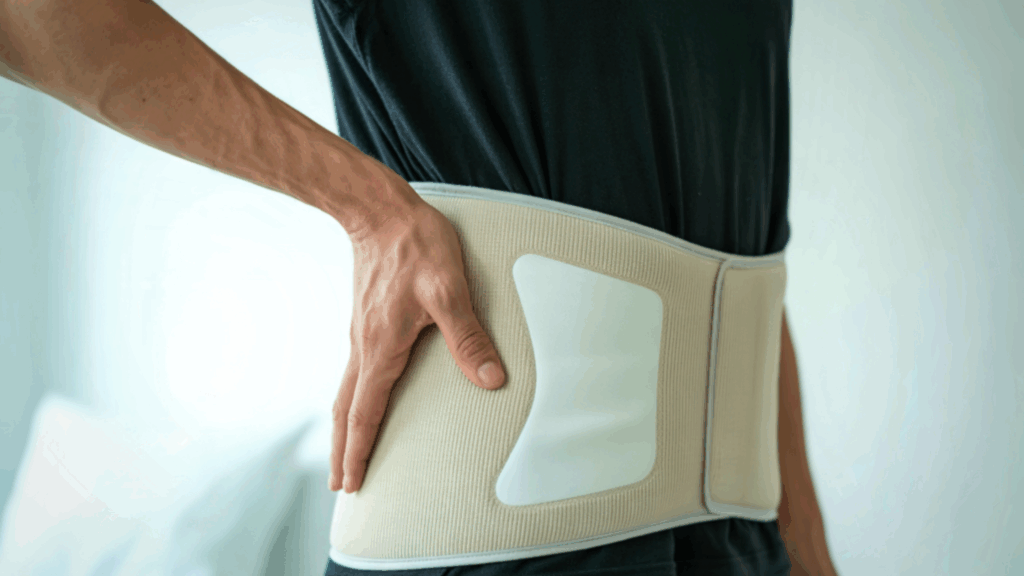
Low back pain is one of the most common health problems in the world. When pain flares up, many people wonder if wearing a back brace might help. A back brace, also called an orthosis, is a device worn around the lower back to support the spine, reduce movement, or improve posture. Deciding whether or not to wear one can be confusing, so it helps to understand the advantages, disadvantages, and when a brace might be useful.
Advantages of Wearing a Back Brace
There are several reasons why people use back braces. Some benefits come from medical research, and others are based on how the braces are designed to help.
1. Extra Support
A brace can give your spine support when your muscles are tired, weak, or injured. This support may help reduce pain during daily activities.
2. Reduced Painful Movements
By limiting the motion of your lower back, a brace can help prevent sudden twists or bends that might worsen your symptoms. This is especially helpful during activities like lifting, bending, or long periods of standing.
3. Improved Posture
Many braces help keep your spine in a healthier, more upright position. Good posture can reduce pressure on the discs and joints in your lower back.
4. Sensory Feedback
One of the most underrated benefits is proprioceptive feedback, which means the brace reminds your body when you are moving in ways that may be unsafe or unhealthy. Feeling the brace tighten or shift can cue you to correct your form.
5. Temporary Pain Relief
For some people, wearing a brace brings short-term comfort. This can make it easier to walk, work, or do chores around the house.
Common Designs and Categories of Back Braces
Back braces come in different designs. Some are sold over the counter, while others require a prescription.
Over-the-Counter Braces
- Elastic or Neoprene Braces: These are flexible and commonly found in pharmacies. They provide light compression and mild support.
- Velcro Compression Braces: These wrap around your waist and can be tightened to give more stabilization.
- Sports Braces: Made for athletes, these braces help reduce excessive twisting during activity.
Prescription Braces (Medical-Grade Orthoses)
- Rigid or Semi-Rigid Braces: These braces have hard plastic or molded pieces that limit motion more strongly. They may be used after surgery or injury.
- Lumbosacral Orthoses (LSO): These are designed to support the lumbar spine (lower back) and the sacral area.
- Corset-Style Braces: Made from strong fabric, stays, and straps, these provide more structure than simple elastic braces.
Each type of brace has its own level of stability. The correct style depends on the cause of your pain, your activity level, and your doctor’s advice.
Disadvantages of Wearing a Back Brace
Although braces can be helpful, they also have limitations and risks, especially if they’re used too much.
1. Core Muscle Deconditioning (The Biggest Disadvantage)
The main downside is that your core muscles, especially the deep stabilizing muscles, may become “lazy.” When a brace does the work of supporting your spine, your muscles do less. Over time, they can weaken. Weaker muscles mean less natural stability, which can lead to more pain in the long run.
2. Dependence
Some people become emotionally or physically dependent on a brace, feeling like they cannot move without it. This makes it harder to return to normal activity.
3. Reduced Mobility
A rigid brace may limit too much motion. This may help with pain, but it can also make it harder to stay active, which is important for long-term recovery.
4. Skin Irritation
Braces that are too tight or worn for long periods can irritate the skin, especially in hot weather.
Finding the Ideal Middle Ground
The best approach for most people is to avoid wearing a brace all day long. Instead, the ideal middle ground is to use a brace during specific high-risk activities, such as:
- lifting objects
- yard work
- long periods of standing or walking
- sports or exercise
In these moments, the brace provides support and sensory feedback to prevent unhealthy movements. Once the activity is over, remove the brace so your core muscles continue to work and stay strong. Pairing this approach with a regular core-strengthening program is usually the best way to manage most cases of chronic low back pain.
When Pain Persists
If low back pain continues even after improving core strength, stretching, and limiting brace use, then something more serious may be happening. Persistent pain might be a sign of degenerative disc disease or other spine conditions. In that case, a visit to a specialist is important.
An evaluation at the Regenerative Spine & Joint Center can help determine whether there is an underlying disc problem and whether you may be a candidate for the new nonsurgical procedure called Discseel. This treatment is designed to repair damaged discs without surgery and may offer relief for people whose pain is not just muscular.