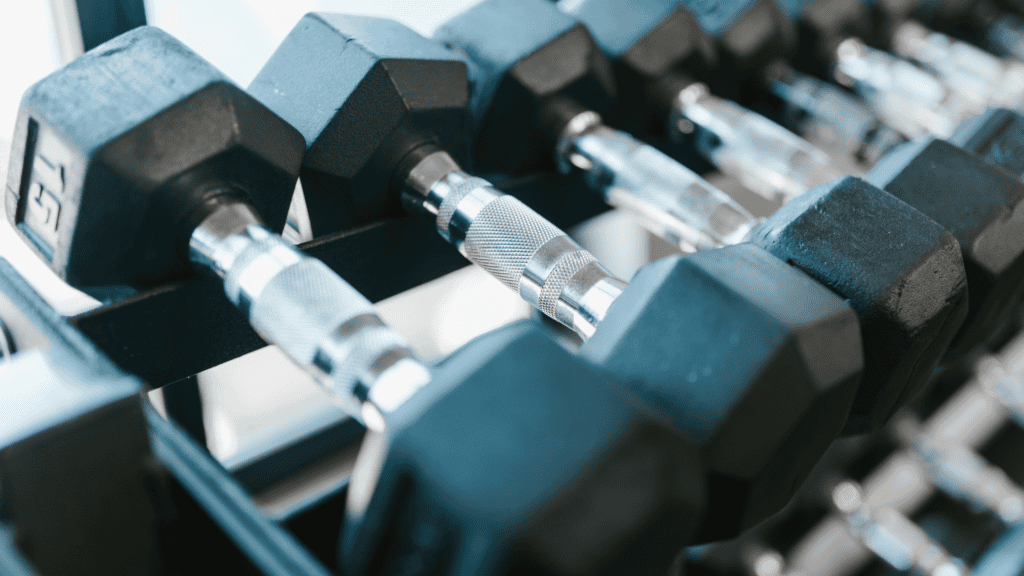
Weight lifting is often recommended to improve strength, fitness, and long term health. It belongs to a larger group of exercise known as resistive training. Resistive training includes any activity where muscles work against resistance. That resistance can come from free weights, machine weights, cable systems, elastic bands, springs, or even your own body weight through exercises like push ups and chin ups.
While strengthening muscles is generally beneficial, not all forms of resistive training are equally safe for your low back. The lumbar spine, especially the spinal discs, is vulnerable to injury when certain movements are repeated over time. Understanding the differences between free weights and machine weights is important if your goal is to build strength while protecting your low back from injury and chronic pain.
Why the Low Back Is Vulnerable
The lumbar spine is designed to support the weight of the upper body while allowing controlled movement. However, spinal discs are not muscles. Muscles have a rich blood supply that allows them to heal after injury. Discs are part of the cartilage tissue family and do not have an adequate blood supply for self healing.
When small cracks, also called fissures, develop in a disc, the healing process is very limited. Over time, these cracks tend to worsen rather than improve. This one way process of gradually worsening disc injury is called degenerative disc disease. Once disc damage begins, it cannot be reversed by exercise, stretching, or rest alone.
Movements that are especially harmful to lumbar discs include trunk bending, twisting, and lifting. These motions are even more dangerous when they are repeated and combined, such as bending forward while twisting and lifting weight. Many common strength training exercises involve exactly these motions. There is no question that these techniques train the targeted muscles, but the questions not asked are what is the consequence to the lumbar discs while challenging those muscles and what are safer alternatives.
Because disc injury cannot heal on its own, avoiding injury in the first place is extremely important.
Free Weights: Benefits and Risks
Free weights include dumbbells, barbells, kettlebells, and weighted plates. These tools are popular in gyms and home workouts.
Why Some People Prefer Free Weights
Many people prefer free weights for several reasons:
- Free weights allow a wide variety of exercises.
- They can improve balance and coordination.
- They engage many muscles at once, including stabilizing muscles.
- They are often cheaper and take up less space than machines.
- Athletes believe free weights better mimic real life movements.
These benefits can be real, especially for experienced lifters with excellent technique and no history of back problems.
Free Weights and Low Back Injury Risk
From a low back injury standpoint, free weights carry higher risk. One major reason is that free weights must be lifted into position before the exercise even begins. This means you often have to pick weights up from the floor, racks, or low surfaces.
That lifting to and from the floor is where much of the injury potential exists.
Before the first repetition of a squat, deadlift, press, or row, the lifter must already bend forward, load the spine, and control the weight. If the movement includes twisting or awkward positioning, the risk to lumbar discs increases further.
In addition, free weight exercises require constant awareness of technique not only for the spine, but also for the hips, knees, shoulders, and neck. Fatigue, distraction, or poor form can quickly turn a productive workout into an injury.
Even experienced lifters are not immune. Repetitive loading over months or years can slowly damage discs without causing immediate pain. Many people feel fine until the disc injury reaches a point where symptoms appear.
Machine Weights: Stability and Safety
Machine weights guide the movement along a fixed path. Examples include leg presses, chest presses, seated rows, and selectorized machines that use a weight stack with a pin.
Why Some People Prefer Machine Weights
Machine weights are often preferred because:
- They are easier to learn and use.
- They provide stability and support.
- They reduce the need for balance and coordination.
- They allow isolation of specific muscle groups.
- They feel safer, especially for beginners or older adults.
For many people, these reasons are practical and important.
Machine Weights and Low Back Protection
From a low back injury standpoint, machine weights are safer because all you have to do is move the pin. The weight is already supported by the machine before you start the exercise.
Typically, machines allow your body to be set in an advantageous position before you engage the weight. Seats, pads, and backrests help maintain proper posture and spinal alignment. This greatly reduces unnecessary bending, twisting, and lifting.
Because the movement path is controlled, there is less chance of sudden shifts or loss of balance. This decreases the stress placed on lumbar discs during the exercise.
For individuals with a history of back pain, disc injury, or limited mobility, machines offer a safer way to maintain muscle strength without exposing the spine to unnecessary risk.
Cable Machines: A Special Category
Cable machines deserve special mention because they are often misunderstood. While they are machines, many cable exercises are designed specifically for bending, twisting, and rotating the trunk.
Examples include wood chops, rotational pulls, and twisting crunch movements. These exercises may be promoted as core strengthening or functional training.
From a lumbar disc health perspective, these movements are dangerous.
Repeated bending and twisting under resistance places high stress on discs. While muscles may adapt and become stronger, the discs quietly accumulate damage. The risk reward ratio must be carefully evaluated.
It is important to ask whether the muscular benefit from these exercises outweighs the eventual damage they cause to lumbar discs. In many cases, safer alternatives exist that strengthen muscles without exposing the spine to harmful motion.
Muscles Heal, Discs Do Not
Many well intentioned fitness professionals recommend exercises that improve muscle strength and endurance. Their advice is often correct from a muscle standpoint.
However, muscles and discs behave very differently after injury.
Muscles heal because they receive blood, oxygen, and nutrients. Discs do not heal well because they lack direct blood supply. Once disc fissures begin, the damage progresses in one direction.
This is why it is possible to feel stronger and fitter while your discs are slowly deteriorating. Pain may not appear until the damage is advanced.
Knowing how to avoid disc injury is far more important than trying to treat it later.
Making Smart Choices in Resistive Training
Resistive training does not have to be dangerous. Safer options include:
- Selectorized machine weights with proper posture
- Body weight exercises that keep the spine neutral
- Elastic bands used without bending or twisting
- Exercises performed seated or supported
The goal should be to strengthen muscles while minimizing spinal disc stress. Not every effective muscle exercise is a safe spine exercise.
Understanding your personal goals, injury history, and risk tolerance is essential. What is appropriate for one person may be harmful for another.
What If Disc Injury Has Already Occurred
If you already have lumbar disc injury, it is important to know that traditional treatments often focus on pain control rather than disc repair.
Discseel is a nonsurgical procedure designed to treat lumbar disc injuries at their source. During the Discseel procedure, a biologic fibrin solution is injected into the damaged disc under imaging guidance. This sealant is designed to close disc fissures and stop painful chemical and mechanical irritation. Boris Terebuh, MD is Ohio’s first and most experienced licensed Discseel provider.
Final Thoughts
Free weights and machine weights both have a place in fitness, but they are not equal when it comes to protecting your low back. Free weights require lifting and positioning that exposes the lumbar discs to bending, twisting, and loading. Machines allow safer setup and controlled movement that better protects disc health.
Because disc injury cannot heal on its own, prevention is critical.
If you would like coaching to help you choose resistive training strategies that align with your goals while protecting your lumbar discs, schedule a consultation with the Regenerative Spine and Joint Center.
If you have already injured your lumbar discs, schedule a consultation today with Dr. Boris Terebuh at the Regenerative Spine and Joint Center to find out if you are a Discseel candidate.