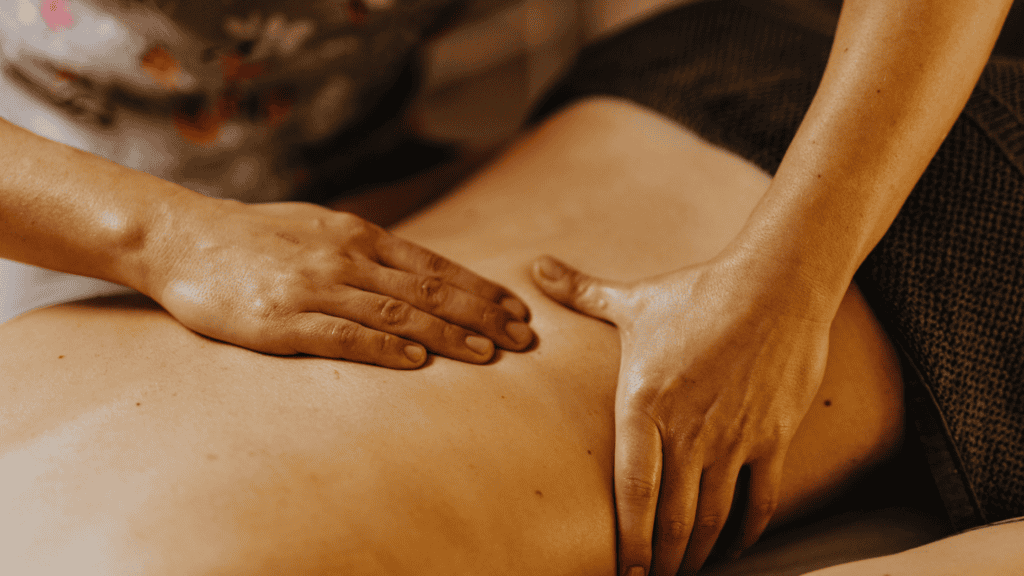
Can Massage Help Low Back Pain?
Massage therapy is one of the most popular treatments for low back pain. Whether you visit a day spa or a licensed medical massage therapist, massage can reduce muscle tension, improve flexibility, and help you feel better. For many people, it provides meaningful relief from sore muscles and stiffness. However, if your back pain keeps returning after massage, the real problem may be coming from deeper structures within the spine rather than the muscles themselves.
Common Types of Massage for Low Back Pain
Massage therapy includes a wide range of techniques, from relaxation treatments to medically focused therapies. Commonly available methods include:
- Swedish massage
- Spa relaxation massage
- Deep tissue massage
- Therapeutic massage
- Medical massage
- Sports massage
- Trigger point therapy
- Myofascial release
- Neuromuscular therapy
- Shiatsu massage
- Thai massage
- Reflexology
- Lymphatic drainage massage
- Prenatal massage
- Hot stone massage
- Chair massage
- Craniosacral therapy
- Structural integration (Rolfing)
- Assisted stretching massage
Each technique has a different purpose. Spa massages emphasize relaxation and stress reduction. Deep tissue and trigger point therapy focus on tight muscles and painful knots. Medical massage is performed as part of a treatment plan for specific medical conditions under the direction of a healthcare provider.
How Massage Relieves Muscular Low Back Pain
Muscles often become tight after overuse, injury, poor posture, or prolonged sitting. Tight muscles can reduce blood flow, create painful trigger points, and limit normal movement.
Massage helps relieve muscular pain in several ways:
- Increases blood circulation to tired muscles.
- Improves oxygen and nutrient delivery.
- Helps remove metabolic waste products.
- Reduces muscle spasms and stiffness.
- Improves flexibility and range of motion.
- Stimulates the nervous system to decrease pain perception.
- Promotes relaxation by lowering stress and encouraging the release of natural pain-relieving chemicals called endorphins.
Many people experience less pain immediately after a massage. Others notice improved movement and reduced stiffness for several days afterward. Regular massage may also help reduce stress, which can contribute to chronic muscle tension.
When Massage Provides Only Temporary Relief
Massage works very well for muscle-related pain, but it does not repair structural problems inside the spine. If your low back pain improves for a day or two after each massage but quickly returns, the muscles may simply be reacting to another pain source.
In these situations, it is often helpful to consult a physician with specialized training in nonsurgical spine care. A thorough examination and appropriate imaging studies can determine whether the muscles are becoming tight because of an underlying spinal condition rather than being the primary source of the pain.
The Spine Can Generate Pain from More Than Muscles
Several structures inside the lumbar spine can produce chronic low back pain.
One common source is arthritis affecting the facet joints. These small joints connect the vertebrae and allow normal spinal movement. As they wear with age, inflammation and arthritis can develop, causing pain with standing, bending, or twisting.
Another important source of pain lies even deeper inside the spine: the lumbar intervertebral discs.
Understanding Lumbar Disc Anatomy
The lumbar discs sit between the vertebrae and function as shock absorbers. Each disc has two main parts:
- The nucleus pulposus is the soft, gel-like center that absorbs pressure.
- The annulus fibrosus is the strong outer ring made of multiple layers of collagen fibers that contain the nucleus and provide strength.
Healthy discs allow the spine to bend, twist, and absorb the forces created by everyday activities.
Degenerative Disc Disease and Annular Fissures
As people age or experience repeated stress on the spine, the discs gradually lose water content and become less flexible. This process is called degenerative disc disease.
As degeneration progresses, tiny tears called annular fissures can develop within the outer annulus fibrosus. These fissures may become painful because they can stimulate pain-sensitive nerve fibers that grow into damaged areas of the disc.
Unlike muscles, intervertebral discs have very little direct blood supply. Only the outer edge of the disc receives blood vessels. The inner portions depend on slow diffusion of nutrients from nearby vertebrae. Because of this limited circulation, annular fissures generally cannot heal spontaneously. The damaged tissue often remains present for years, allowing chronic pain to continue even when the surrounding muscles temporarily relax after massage therapy.
Discseel: A Nonsurgical Treatment for Degenerative Disc Disease
When chronic low back pain originates from painful annular fissures, treatment directed at the disc itself may be appropriate.
The DISCSEEL® Procedure is a minimally invasive, image-guided treatment developed to address painful annular fissures. The procedure uses fibrin, a naturally occurring repair protein, to seal damaged areas within the annulus while supporting the body’s healing response. The goal is to treat one of the underlying causes of disc-related pain rather than simply reducing muscle tightness.
Not every patient is a candidate for the DISCSEEL Procedure. A careful history, physical examination, and review of MRI findings are necessary to determine whether disc degeneration is responsible for the symptoms.
When to Contact a Nonsurgical Spine Specialist
Massage therapy remains an excellent treatment for muscular low back pain. It can improve comfort, reduce muscle tension, and help many people stay active. However, if massage provides only temporary relief or your symptoms repeatedly return despite regular treatment, the muscles may not be the primary problem.
The physician at Regenerative Spine & Joint Center specializes in identifying the true source of chronic low back pain and providing comprehensive nonsurgical treatment options. If massage alone is no longer controlling your symptoms, schedule an evaluation to determine whether arthritis, degenerative disc disease, or another spinal condition is contributing to your pain. An accurate diagnosis is the first step toward long-lasting relief.